LMX4644 contre LTM4644 : Une comparaison complète des performances
For engineers designing power systems for FPGAs, ASICs, and other multi-rail loads, the LTM4644 from Analog Devices (formerly Linear Technology) has long been a reference design. This quad-output DC-DC step-down μModule regulator delivers 4A per channel (up to 16A when paralleled) in a compact 9mm × 15mm × 5.01mm BGA package, with an input range of 4V–14V and adjustable outputs from 0.6V to 5.5V.
But supply chain uncertainty has driven demand for reliable alternatives—especially fully domestic options that ensure long-term availability and localized support. Enter the LMX4644 series from Beijing Langma Xinchuang (朗玛芯创), a 2021-founded fabless power module design house staffed by veterans from Huawei and TI with over 15 years of industry experience.
The question: Can LMX4644 truly match—or even exceed—the performance of the original? Here's a complete head-to-head comparison based on available test data.
1. Pin Compatibility: A True Drop-In Replacement?
Before evaluating performance, compatibility is the first gate. For a "drop-in replacement," pin compatibility must extend beyond power pins to include control and feedback signals.
The verdict: LMX4644 is confirmed as a pin-compatible, fully functional replacement for LTM4644. This includes:
-
EN, RUN, PGOOD, TRACK/SS, SYNC, FB, TEMP, and COMP pins
-
Same BGA-77 package footprint: 9mm × 15mm
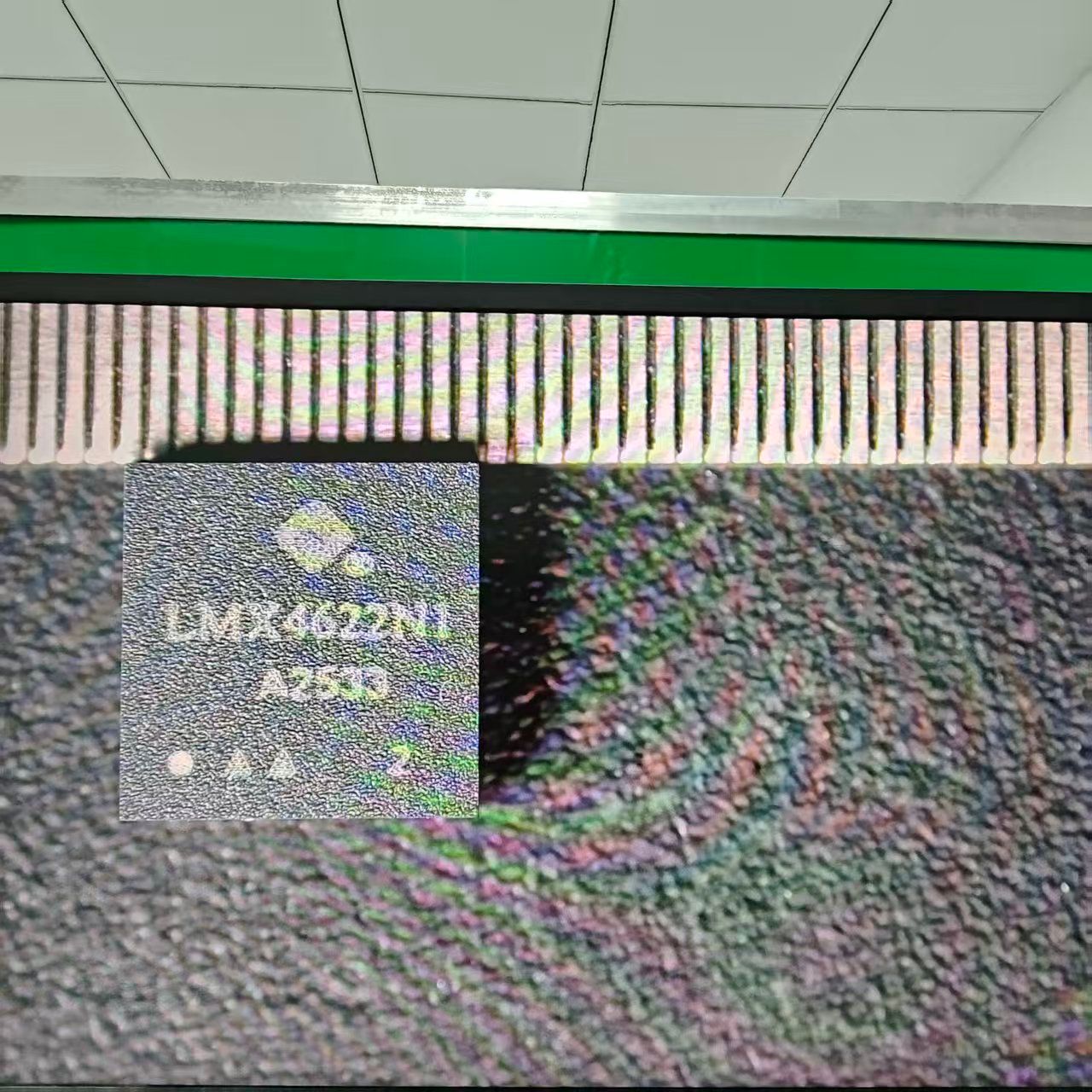
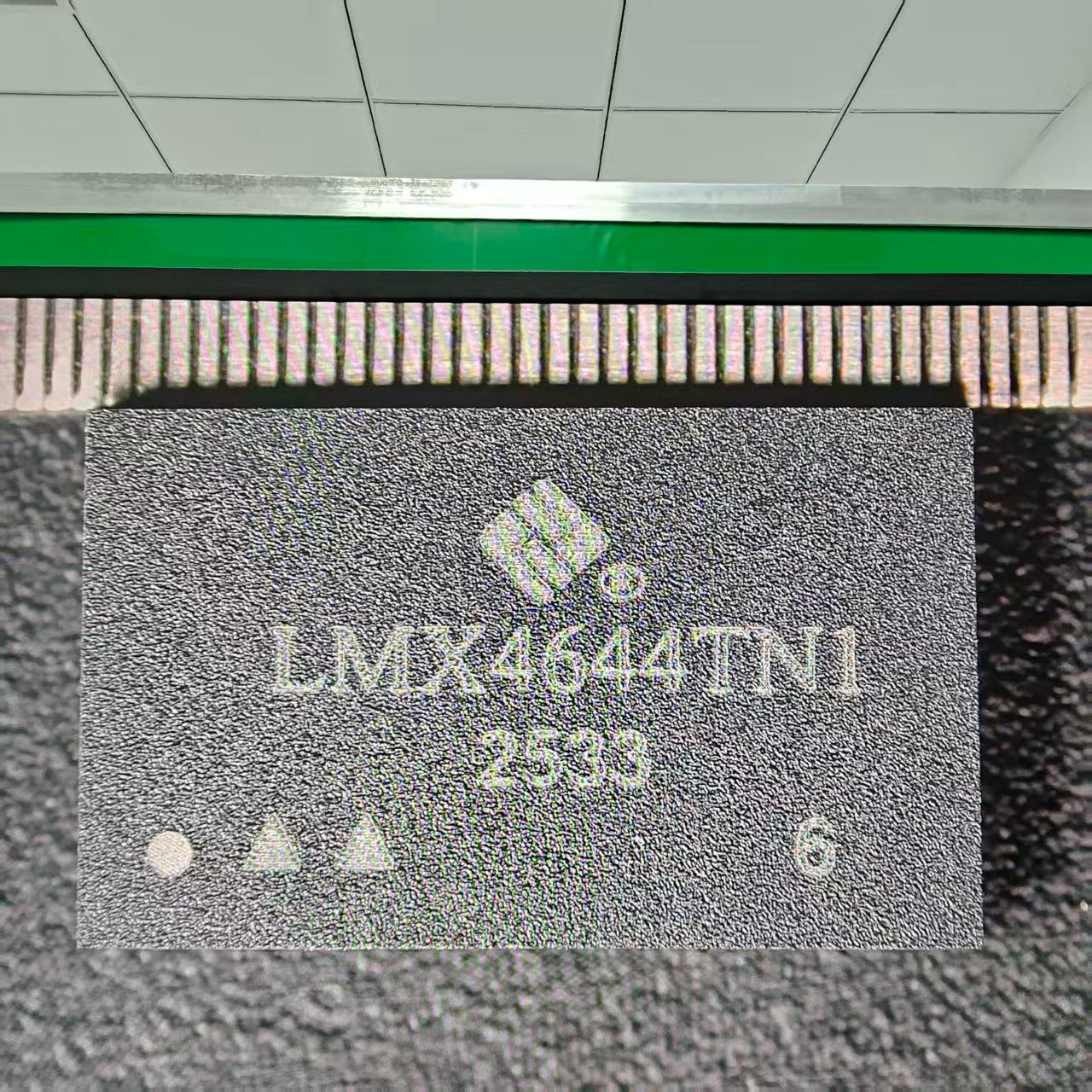
Multiple variants are available for different application grades:
| Model | Grade | Key Feature |
|---|---|---|
| LMX4644N1 | N1 Level | Standard replacement |
| LMX4644BJ | M1 Level | Enhanced reliability |
| LMX4644SH | Military Temperature | -55°C~125°C guaranteed |
| LMX4644SZ | Wide Temperature Industrial | Broad operating range |
| LMX4644T | Ultra-thin | 2.506mm height (vs. 5.01mm) |
| LMX4644GZ | Civilian Grade | Cost-optimized |
The LMX4644T offers a significant advantage for height-constrained designs—2.506mm vs. the standard 5.01mm, nearly halving the module thickness. However, it's worth noting that the thin version may have different thermal derating characteristics compared to the standard version.
2. Efficiency: The 1%–4% Advantage
Efficiency isn't just an abstract number—it translates directly to heat. In a BGA module with limited thermal dissipation paths, every watt saved matters. A 1% efficiency gain at 80W output reduces power loss by about 0.78W, which can significantly impact junction temperature and reliability.
Test Condition 1: VIN = 5V, VOUT = 1.2V
| Load Current | LMX4644 Efficiency | LTM4644 Efficiency | LMX Advantage |
|---|---|---|---|
| 0.5A | 88.10% | 87.59% | +0.51% |
| 1A | 89.39% | 89.28% | +0.11% |
| 2A | 87.37% | 86.92% | +0.45% |
| 4A | 80.35% | 78.58% | +1.77% |
Source: Independent test data
At 4A per channel (the full rated load), the LMX4644 shows a 1.77% efficiency advantage. Per channel, this translates to approximately 0.14W less loss; across four channels, that's about 0.56W—a meaningful thermal difference for a small BGA module.
Test Condition 2: VIN = 12V, VOUT = 1.2V
| Load Current | LMX4644 Efficiency | LTM4644 Efficiency | LMX Advantage |
|---|---|---|---|
| 0.5A | 79.20% | 78.13% | +1.07% |
| 1A | 82.99% | 82.44% | +0.55% |
| 2A | 83.61% | 82.85% | +0.76% |
| 4A | 78.64% | 76.91% | +1.73% |
Source: Independent test data
This test condition is more demanding—with a 12V input and 1.2V output, the duty cycle is much smaller, increasing switching losses and making control loop stability more challenging. LMX4644 maintained a 0.55%–1.73% efficiency advantage, with the full-load gain again around 1.7%.
The takeaway: Efficiency improvement is consistent across both test conditions, with the most significant gains at full load—exactly where thermal management is most critical.
3. Input Voltage Range: Wider is Better
| Parameter | LMX4644 | LTM4644 |
|---|---|---|
| Input Voltage Range | 4V–20V (usable to 24V) | 4V–14V |
| With External Bias | 4V–20V | 2.375V–14V |
Source: Product specifications
The LMX4644 supports up to 20V input (with 24V usable), compared to LTM4644's 14V maximum. This provides valuable design headroom for systems with higher bus voltages, reducing the need for additional pre-regulation stages.
Test data confirms that in the -55°C to 125°C temperature range, LMX4644 operates from 4V to 16V, while LTM4644 is specified from 4V to 14V—a 2V wider margin under full temperature conditions.
4. Temperature Range: Extreme Environment Capability
| Parameter | LMX4644 | LTM4644 |
|---|---|---|
| Guaranteed Operating Temperature | -55°C to 125°C | -55°C to 125°C (MP grade) |
| Tested Temperature Limit | -60°C to 160°C | — |
Source: Test data
LMX4644 has been tested to operate at -60°C and 160°C, beyond LTM4644's guaranteed range. However, a critical caveat: "tested to" does not equal "guaranteed across all conditions." Engineers should verify:
-
Whether 160°C refers to ambient or junction temperature
-
Whether the device maintains full performance at these extremes
-
Whether reliability testing (HTOL, temperature cycling) supports these limits
As the Arrhenius model shows, semiconductor reliability is exponentially sensitive to temperature—higher operating temperatures accelerate electromigration, package stress, and solder fatigue. For aerospace and military applications, reliability data is as important as the raw temperature spec.
5. Architecture and Design Philosophy
LMX4644 uses a 0.18μm BCD process (Bipolar + CMOS + DMOS) with 5 metal layers, compared to LTM4644's 0.35μm BCD with 4 metal layers. The finer geometry allows for:
-
Smaller die size
-
Potentially better switching characteristics
-
Improved integration
Key architectural notes:
-
Four integrated Schottky diodes per channel reduce external component count and minimize high-frequency loop parasitics, but also concentrate heat within the package
-
Positive design approach with fully domestic supply chain (wafer fab, packaging, testing all in China) versus some alternatives that rely on repackaged controller dice
-
Phase-shifted operation: Like LTM4644, LMX4644 runs four channels at 90° phase offsets to minimize input ripple and EMI
The "positive design" distinction matters for long-term reliability and supply chain security. Some domestic 4644 alternatives simply repackage an LTC3605 controller die with different encapsulation materials—which can create thermal compatibility issues at high temperatures. LMX4644's approach uses fully domestic manufacturing and materials.
Summary Comparison Table
| Parameter | LMX4644 | LTM4644 | Advantage |
|---|---|---|---|
| Input Voltage | 4V–20V (usable 24V) | 4V–14V | LMX4644 |
| Output per Channel | 4A | 4A | Tie |
| Parallel Total | 16A | 16A | Tie |
| Package | 9×15×5.01mm BGA | 9×15×5.01mm BGA | Tie |
| Efficiency (12V→1.2V@4A) | 78.64% | 76.91% | LMX4644 (+1.73%) |
| Temperature Range | -55°C to 125°C (guaranteed) | -55°C to 125°C | Tie |
| Tested Limits | -60°C to 160°C | — | LMX4644 |
| Process Node | 0.18μm BCD, 5-layer metal | 0.35μm BCD, 4-layer metal | LMX4644 |
| Supply Chain | Fully domestic | Imported | LMX4644 |
| Integrated Schottky | Yes (4×) | No | LMX4644 |
| Thin Version Available | Yes (2.506mm) | No | LMX4644 |
Final Verdict
The LMX4644 is more than a clone—it's a performance-enhanced replacement for the LTM4644. Key advantages include:
✅ Wider input voltage (20V vs. 14V) for greater design flexibility
✅ Higher efficiency (1%–4% gain, especially at full load) reducing thermal stress
✅ Broader tested temperature range (-60°C to 160°C) for extreme environments
✅ Fully domestic supply chain ensuring long-term availability
✅ Ultra-thin variant (2.506mm) for height-constrained designs
✅ Integrated Schottky diodes reducing external component count
That said, for critical aerospace and military applications, engineers should request full reliability reports (HTOL, temperature cycling, batch consistency) to validate performance under their specific operating conditions. The raw performance numbers are impressive, but reliability data is essential for the most demanding applications.